
AI Model Comparison 101 ChatGPT vs Claude vs Gemini vs More
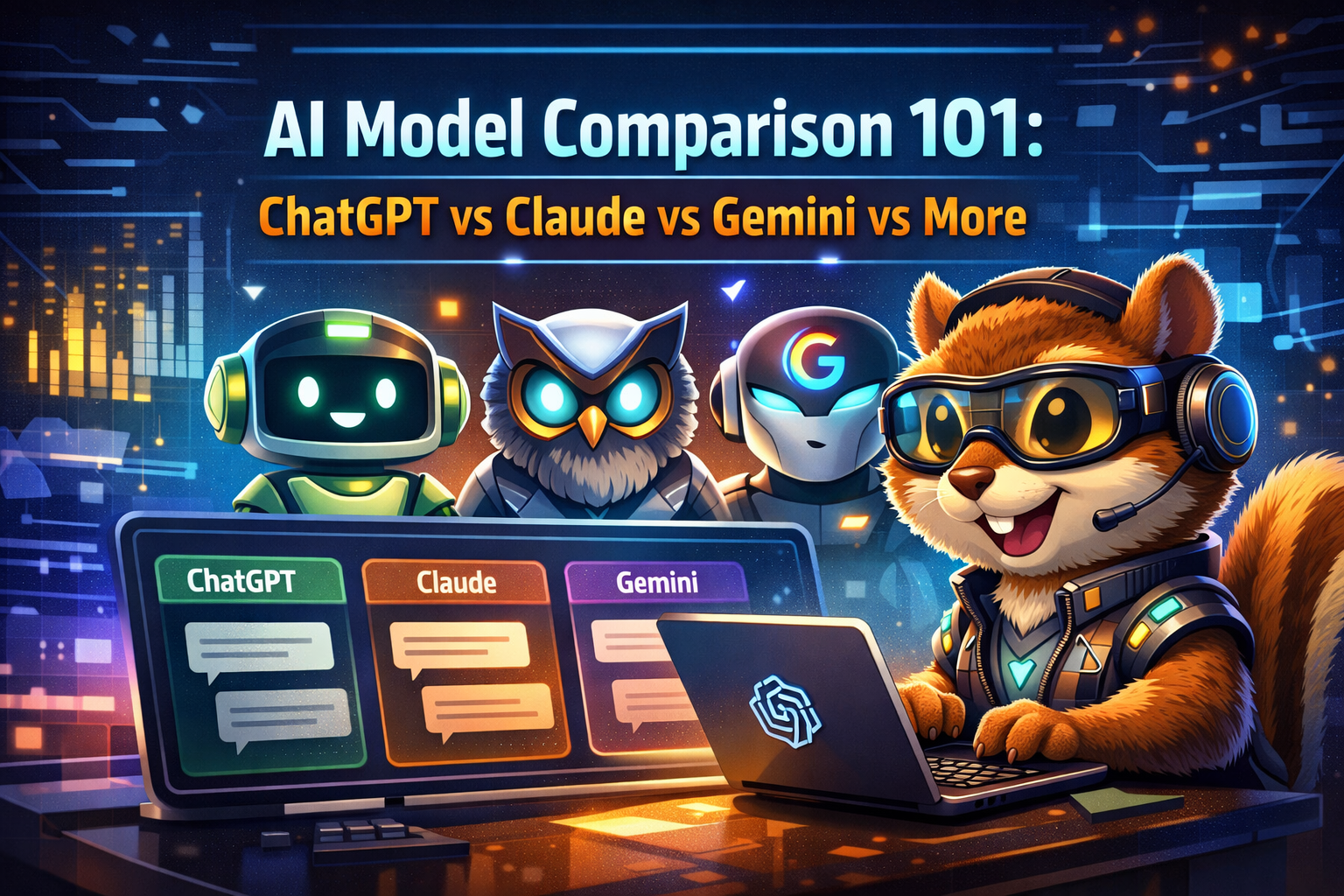
Artificial intelligence tools are evolving faster than ever. Businesses, creators, marketers, and researchers now rely on AI models like ChatGPT, Claude, Gemini, and others to generate content, analyze data, brainstorm ideas, and solve complex problems.
But here is the big question most users are asking.
Which AI model gives the best answers?
The truth is that no single AI model is perfect for every situation. Each large language model has its own strengths, weaknesses, tone, reasoning style, and output structure. Understanding these differences can dramatically improve your workflow and decision making.
In this AI model comparison guide, we will break down how ChatGPT, Claude, Gemini, and other major AI models respond differently to the same prompts and what that means for you.
Why AI Model Comparison Matters
Most people only use one AI tool. They ask a question, receive an answer, and move on. But different models are trained differently, prioritize information differently, and structure responses differently.
When you compare AI models side by side, you can:
• Identify deeper insights
• Spot gaps or inconsistencies
• Improve accuracy
• Generate more creative results
• Make stronger business decisions
AI comparison is not about picking a winner. It is about leveraging multiple perspectives from advanced language models.
Overview of Major AI Models
Before comparing outputs, let us briefly review the main players.
ChatGPT
Developed by OpenAI, ChatGPT is known for:
• Strong reasoning ability
• Structured responses
• Versatility across industries
• Reliable coding support
• Clear formatting
It performs well for content creation, business writing, technical explanations, and general knowledge queries.
Claude
Developed by Anthropic, Claude is often praised for:
• Long context handling
• Detailed explanations
• Thoughtful and nuanced responses
• Strong summarization
Claude often produces responses that feel reflective and human centered.
Gemini
Developed by Google, Gemini stands out for:
• Strong integration with Google search knowledge
• Real time information capabilities
• Data driven answers
• Multimodal capabilities
Gemini often excels in research based prompts and fact oriented responses.
Other Emerging Models
There are additional models such as Mistral, Grok, and open source LLMs that may specialize in:
• Speed
• Customization
• Domain specific tasks
• Cost efficiency
Each model approaches prompts with slightly different internal logic.
How Different AI Models Respond to the Same Prompt
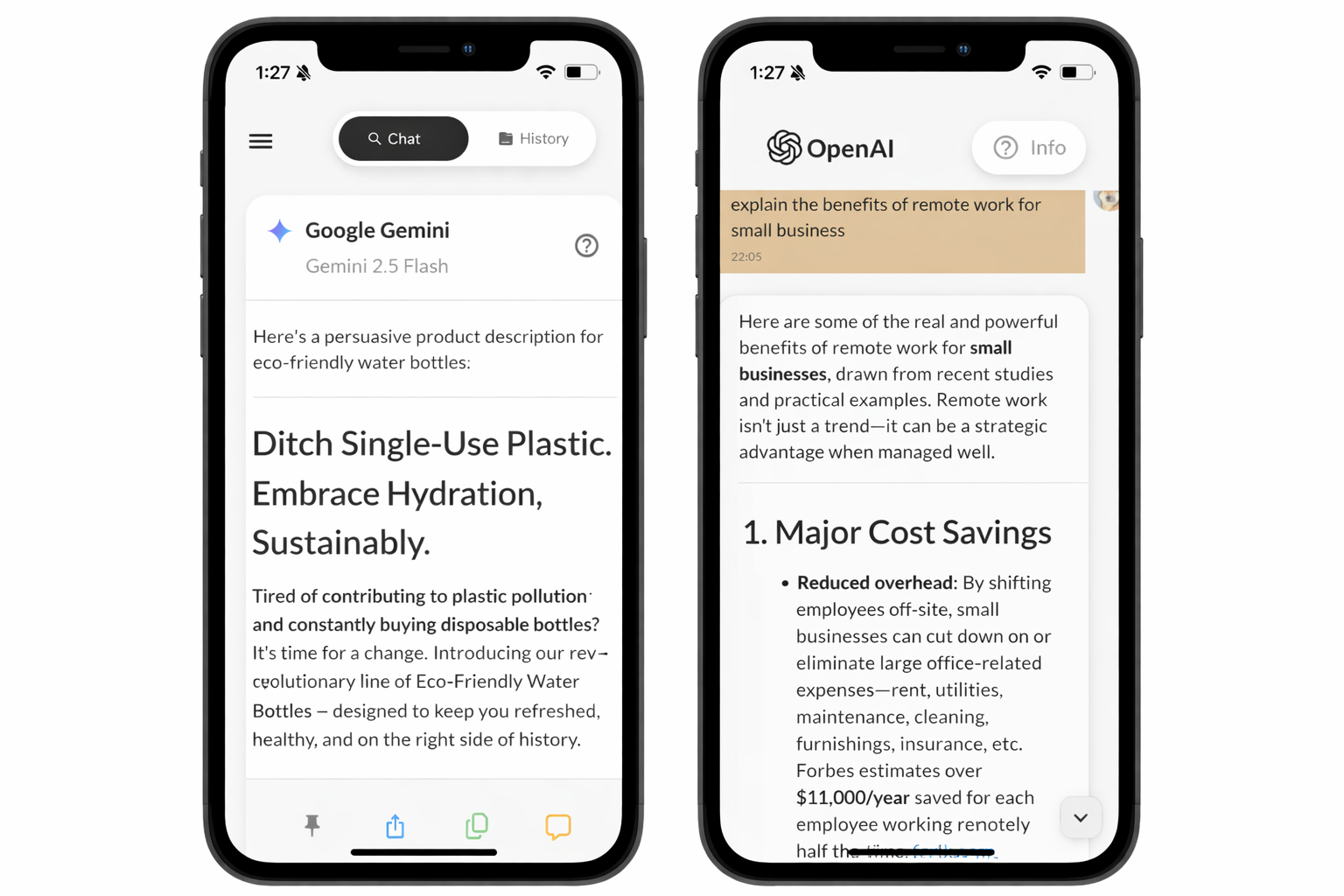
Let us examine how these AI tools may respond differently.
Example Prompt 1
Explain the benefits of remote work for small businesses
ChatGPT might provide a structured list with clear headings and business focused reasoning. The tone is often professional and concise.
Claude may expand more on human experience, discussing employee well being, communication dynamics, and long term cultural impacts.
Gemini could include more data points or statistics, especially if connected to current research trends.
The difference is not necessarily accuracy but emphasis and structure.
Example Prompt 2
Write a persuasive product description for eco friendly water bottles
ChatGPT may generate a polished marketing style copy with clear benefits and call to action.
Claude might lean into storytelling and emotional appeal, emphasizing sustainability values.
Gemini could incorporate comparative positioning and broader environmental context.
Each output can serve a different marketing objective.
Example Prompt 3
Summarize a complex legal document
ChatGPT often produces clean summaries with logical breakdowns.
Claude typically excels at nuanced explanation and maintaining context across long passages.
Gemini may focus more on clarity and simplified structure.
For long documents, some models handle context windows better than others, which impacts completeness.
Key Differences in AI Model Behavior
1. Tone and Voice
Some models default to professional and structured output. Others lean toward conversational or reflective tones.
Choosing the right model can align with your brand voice.
2. Depth vs Conciseness
Certain models provide concise summaries. Others generate layered explanations with more context.
If you need quick answers, one model may perform better. If you need strategic insight, another may shine.
3. Creativity vs Precision
Creative writing prompts often produce varied results across models. Some lean imaginative while others stay factual.
Comparing outputs improves creative ideation.
4. Handling Ambiguity
When prompts are unclear, some models ask clarifying questions while others make assumptions.
This affects reliability in professional use cases.
5. Context Retention
For long research or document analysis, context window size matters. Models differ significantly in how much information they can retain.
Why Businesses Should Compare AI Outputs
For businesses, relying on a single AI tool can create blind spots.
By comparing responses from multiple models, teams can:
• Cross validate information
• Strengthen strategic decisions
• Enhance content quality
• Improve risk assessment
• Reduce bias in AI generated outputs
AI comparison is essentially digital due diligence.
The Role of AI Aggregation Platforms
Manually switching between AI tools is time consuming. It slows productivity and makes direct comparison difficult.
AI aggregation platforms allow users to submit one prompt and instantly view responses from multiple leading AI models in one dashboard.
This approach enables:
• Faster insight gathering
• Efficient decision making
• Better prompt optimization
• Side by side model analysis
Instead of asking which AI is best, users can leverage all of them.
How to Get Better Results When Comparing AI Models
To maximize value from AI model comparison:
Use clear and specific prompts
Test both broad and detailed instructions
Compare structure, tone, and accuracy
Combine strengths from multiple outputs
Refine prompts based on differences
Prompt engineering becomes more powerful when you can see how each model interprets your request.
The Future of AI Model Comparison
As large language models continue evolving, their outputs will become more specialized. We may see:
• Industry specific AI models
• Increased personalization
• Stronger reasoning capabilities
• More multimodal responses
The future will not belong to a single AI model. It will belong to users who know how to compare and synthesize insights across multiple systems.
Final Thoughts
ChatGPT, Claude, Gemini, and other AI models each bring unique strengths to the table. None are universally superior. The real advantage comes from understanding how they differ and using those differences strategically.
AI model comparison is no longer optional for serious professionals. It is becoming a competitive advantage.
If you want deeper insights, smarter decisions, and higher quality outputs, comparing AI responses side by side is the smartest way forward.